From a 0.5 ha walled vineyard in Chambolle-Musigny to 48 ha spanning Côte d'Or, Hombeline Guyon on her journey that led her back to her family's beginning.
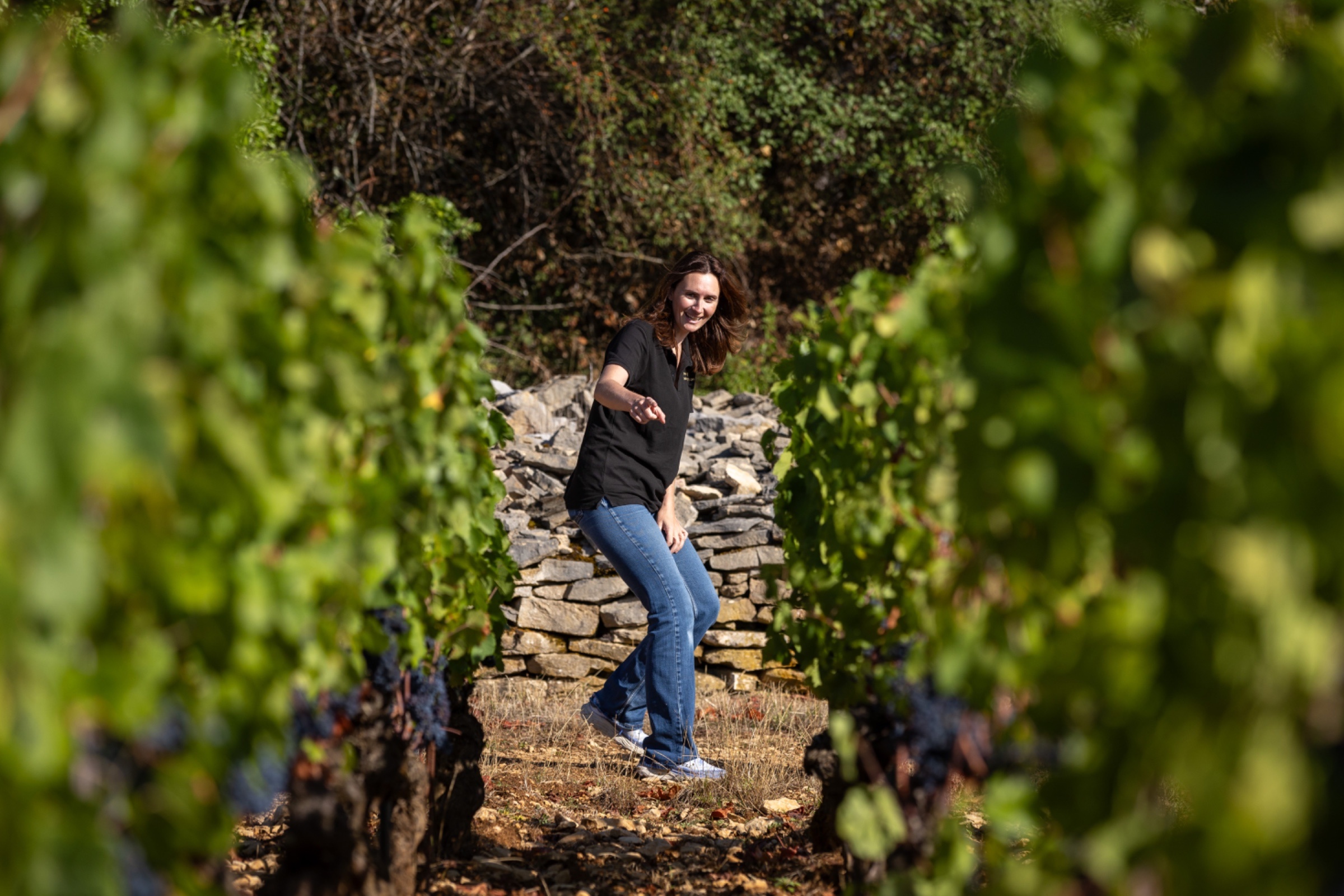
Third generation Hombeline Guyon, who now heads both Domaine Antonin Guyon and Domaine Dominique Guyon with her father Dominique Guyon. (Photo Credit: Domaine Antonin Guyon)
It all started with a closed vineyard, surrounded by walls.
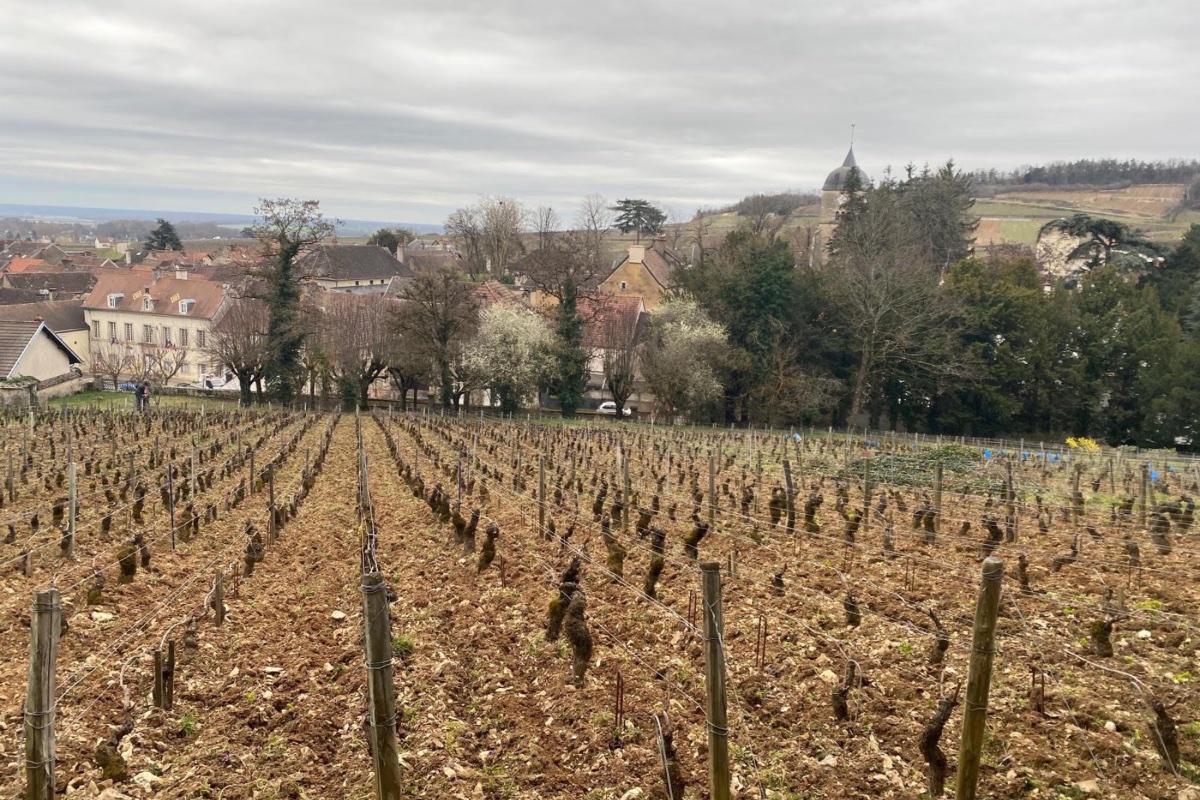
In Burgundy, a vineyard enclosed by walls is known as a clos. In 1960, Hombeline Guyon’s grandfather, Antonin, acquired a property in Chambolle-Musigny whose vineyard had been left fallow. He decided to replant it with vines, establishing the family’s Clos du Village monopole. Covering just 0.5 hectares and owned entirely by the Guyon family, it was here that the story of Domaine Antonin Guyon began.
Chambolle-Musigny Clos du Village monopole with the church of Chambolle-Musigny in the background. (Photo Credit: Hombeline Guyon)
Hombeline is a child of Burgundy. She grew up with those vineyards, spending time with her grandfather, her uncle and her father imparting her the values of their family. Decades later in 2010, she joined the initial team of four, as she recalls it, working alongside Aubert de Villaine of Domaine de la Romanée-Conti, to work on the communications for the Burgundy Climats UNESCO World Heritage project.
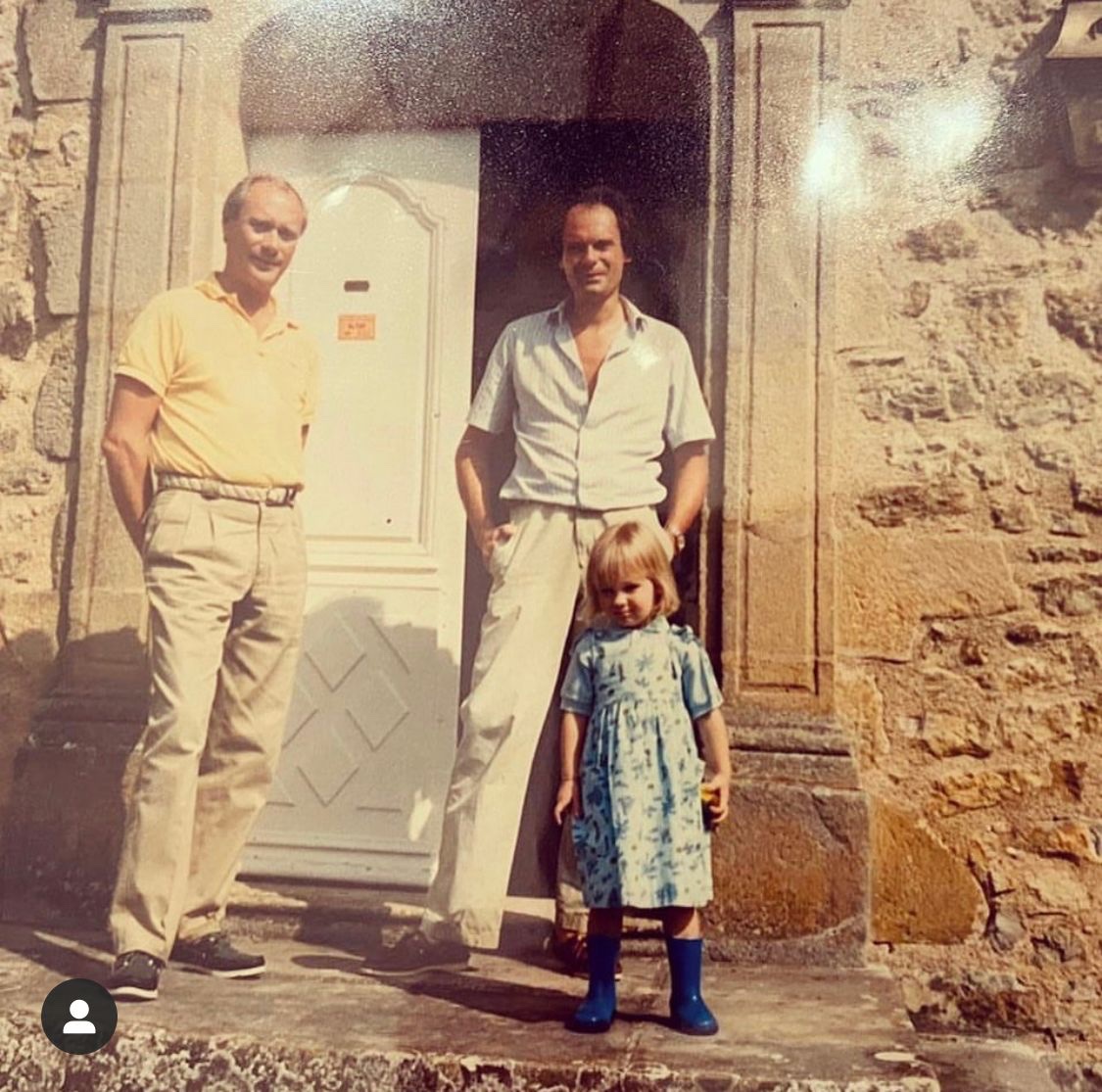
Young Hombeline with her uncle Michel (on the left) and her father Dominique (on the right). (Photo Credit: Domaine Antonin Guyon)
In 2015, these historic 1,247 climats (demarcated vineyard plots) along the Côte de Nuits and Côte de Beaune were officially inscribed on the UNESCO World Heritage List. "Knowledge, emotion and heart", Hombeline recalls, speaking of the project.
“It was my path back home to the domaine,” she shares. Hombeline has lived and worked in countries including China, Japan and the United States. She had wanted to become a journalist, but she shares, “in my heart I know I will join back”.
In 2014, she rejoined her family’s domaine.
The Napoleonic Civil Law back in 1804 continues to have its effect on Burgundy’s fragmented vineyard ownership today, through centuries of inheritance law mandated by equal estate division amongst heirs. Antonin Guyon embarked on an ambitious decade-long acquisition and “got the famous appellations in Côtes de Nuits and Côtes de Beaune”. Second generation Dominique Guyon, Hombeline’s father, then went on to acquire 350 plots from nearly 80 different owners to create a single 22-hectare block on a south-facing vineyard in the Hautes-Côtes de Nuits.
Today, Domaine Antonin Guyon and Domaine Dominique Guyon consists of a total 48 hectares, across 25 different appellations in Côte d'Or.
Hombeline speaks of her father with unmistakable admiration. “My grandfather bought the vineyards, but it was my father who developed the business and the vinification,” she shares. “That's why my father is very important”. To Hombeline, it was her father who helped realise the full potential of the domaines.
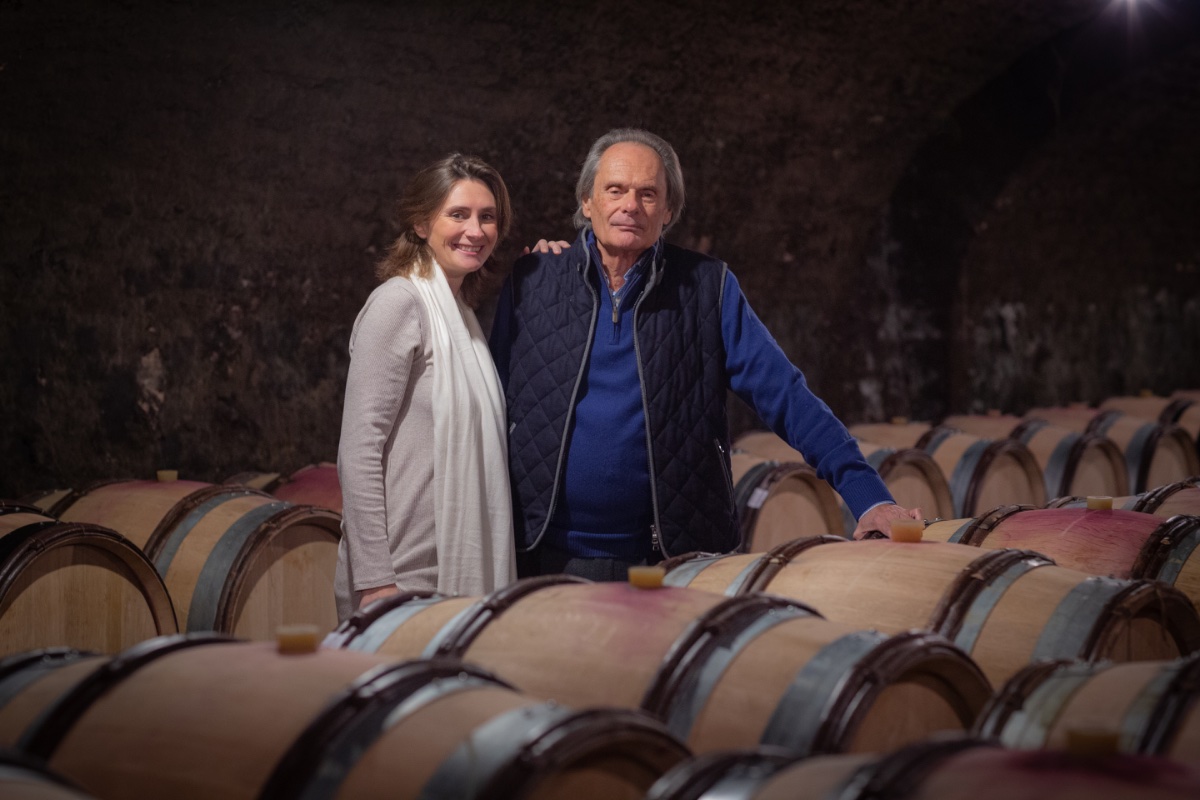
Hombeline Guyon with her father, Dominique. (Photo Credit: Domaine Antonin Guyon)
When Hombeline joined the domaines, she started working in sales. Every year, she followed the winemaking, watching and learning alongside her father. In the vineyards, they shared the same goal: organic certification for Domaine Antonin Guyon. The domaine was certified organic in 2018, though, as Hombeline explains, they “have always been taking care of the vineyards”. The process of obtaining organic certification was “the first vision” she shared with her father.
Speaking of their two-decade relationship with their importer in South Korea, she says, “I have known them for many years now.” The domaine is also represented by long-standing partners in Japan. These relationships hold a special place in her heart, and she believes it is important to look after them, through thick and thin.
Newly established partnerships matter just as much to Hombeline, such as the one with Teck Huat & Co, their importer in Singapore. “From the very start, they have shared the same values and ambition,” Hombeline shares, as she looks to grow the domaine’s presence in Asia.
“Of course I am a woman, and I am a mother of three kids,” she says, speaking of her desire to look after the vineyards for the generations that come after. In 2016, she had her first child, Pia. Then in 2018, Antoine and her third child Orso in 2022.
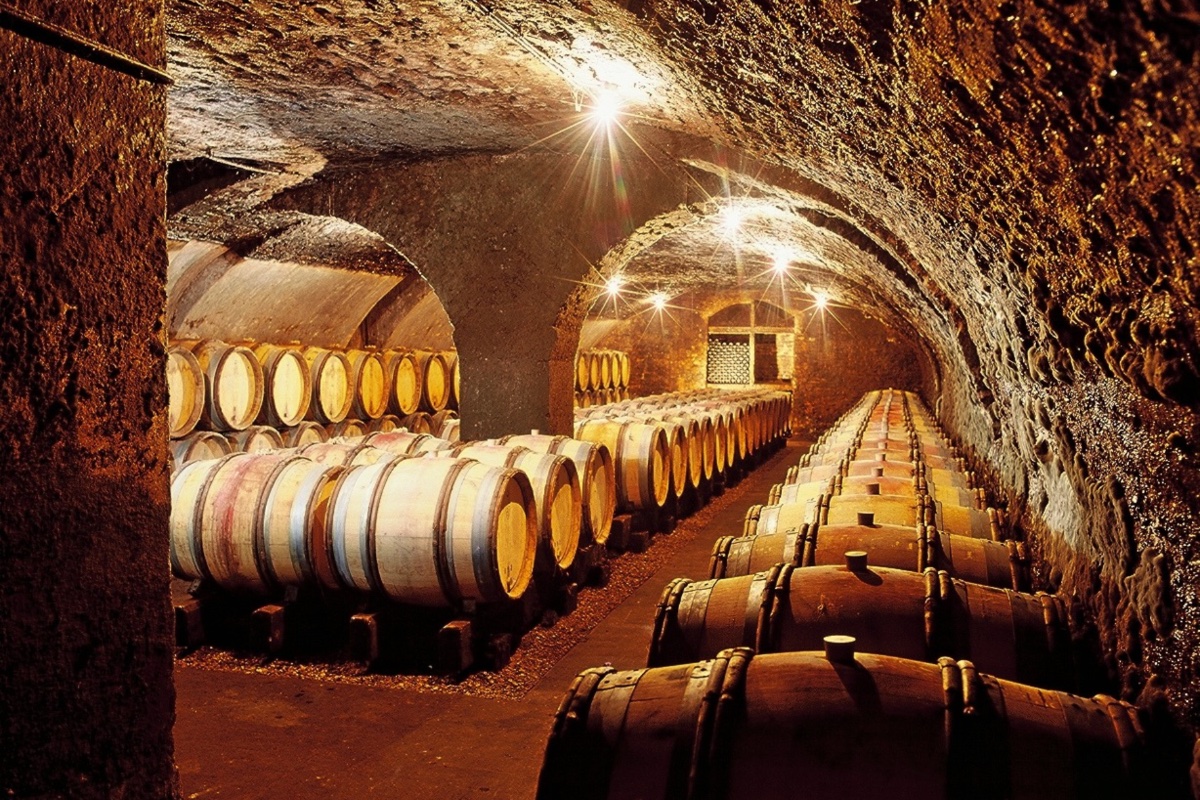
All their wines are aged in oak barrels, specifically from François Frères, and Hombeline aims to express the uniqueness of each appellation.
The cellar of the domaines. (Photo Credit: Domaine Antonin Guyon)
When asked of wines of distinction to their domaines besides the Chambolle-Musigny Clos du Village Monopole, the Corton-Charlemagne was immediately mentioned. They own different parcels within this 60 hectare Grand Cru vineyard, and Hombeline describes the wines as “salty and mineral, expressive and complex”.
AWR Lead Founding Critic Tan Ying Hsien MW noted during the blind critic panel tasting, “full credit to the producer for the transparency of showing the impact of a lesser vintage on a great vineyard”. Another Founding Critic Vincent Tan commented on the evident use of oak, “with ice cream soda, butterscotch and hazelnuts coming across but largely well balanced”, with the “bright acidity contrasts well with the oak”. Across the board, it was agreed that “it has more to offer in the years to come”.
The wines are made of the same care, from the Bourgogne Hautes-Côtes de Nuits appellation to their Grand Cru vineyards.
Hautes-Côtes de Nuits sits at a higher elevation compared to the other Côtes de Nuits appellations. In the past where vineyards struggle to ripen, these Hautes-Côtes de Nuits vineyards were blended into wines made by négociants. Today, with the rising temperature from climate change, these plots that sit on a higher altitude are becoming more desirable. This decision by her father, more than 50 years ago, gave the family an edge that few domaines can match — both in terms of scale and quality.
Hombeline believes that “passion” is passed from one generation to another. “You’ll always come together around the quality of wine, and it is bigger than us.”
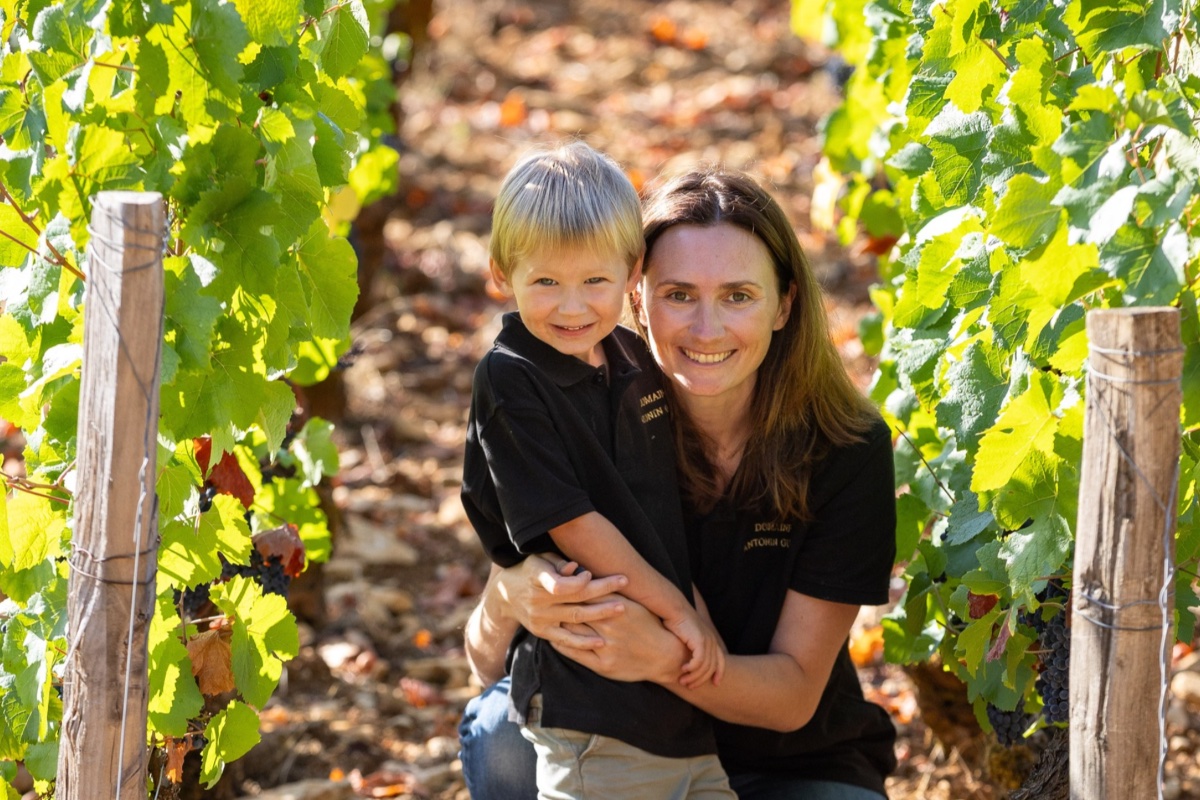
Hombeline Guyon with her younger son and third child, Orso, during the 2026 harvest. (Photo Credit: Domaine Antonin Guyon)
Having travelled across continents and built a life beyond Burgundy, Hombeline eventually found her way back to the vineyards she grew up among. Today, she is no longer simply the little girl accompanying her grandfather and father through the vines. She is also helping shape what the next generation will inherit.
Perhaps that is what makes the Clos du Village so meaningful. A vineyard acquired by her grandfather, developed through the years by her family, and now entrusted to her care.
Some things, it seems, are worth finding your way home for.