ReviewsMembers only
What Tasting 46 Barrel Samples Revealed about the Markus Molitor's 2025 Vintage
These wines were tasted at Weingut Markus Molitor in September 2026.
15 October 2026
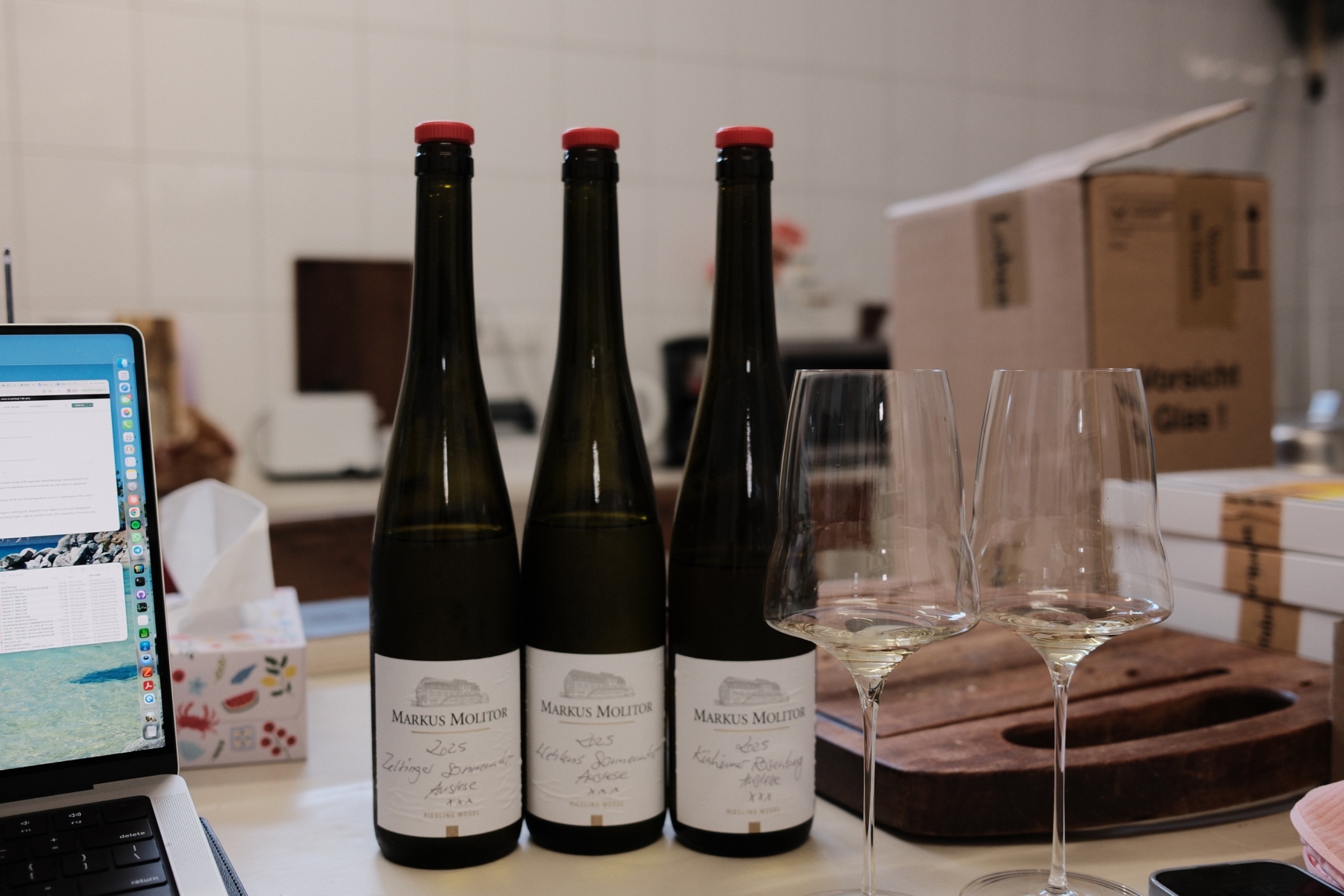
A line up of 3 wines out of the 46 wines from the 2025 vintage that Jaclene tasted from the 2025 Markus Molitor vintage. (Photo Credit; Jaclene Liew)
After a gruelling few days in the steep Mosel vineyards, I was glad to finally step foot in the cellars of Markus Molitor.
In the Vinothek (a specialised wine shop or tasting room) of Markus Molitor, Export Manager Daniel Kiowski handed me two sheets of wine: 46 wines, all barrel samples from the 2025 vintage. Every single bottle was clearly labelled, lined up in sequence in the wine fridge in the Vinothek.
If there’s one thing that keeps me coming back to Germany and its wine region, other than their unbeatable Riesling, is their system. It shows up in their systematic languages and their way of operation. A trait that personally appeals very much to me.
My task, over the next few days of hanging around in the cellar and Vinothek, was also to taste. And give my thoughts on them.
It is worth understanding Markus Molitor’s system before getting into the vintage itself. In German wine law, an Auslese might be dry and a Kabinett can be sweet — which is what makes German wines equal part intriguing and frustrating to consumers. This is because the sugar level indication is for the unfermented grape juice, and not the sugar level when the juice has become wine. This is the clarity I admire about Markus’ own system: white capsules are always dry wines and green capsules are off-dry wines, with gold capsules indicating sweet wines.
To indicate quality, Markus puts stars on his labels. Bottles without stars are the entry-level bottling for that particular site or an estate wine. Three Stars (***) represents the pinnacle of selection, intensity, and complexity, comparable to a Grand Cru. In between are the One Star and Two Stars.
I am not going to bore you with every single wine and tasting note. From the 2025 vintage I tasted, I have selected five wines to feature below. These are unfinished barrel samples, tasted with the styles known, so the scores are my own notes and not AWR blind scores. As per AWR’s scoring methodology, and since I am publishing on AWR, I scored based on how the wine is instead of for its potential. No doubt all of these wines will continue to score much higher in the next few years.
2025 Bernkasteler Doctor *** (white capsule, dry): 94
The legendary Bernkasteler Doctor is arguably the most prestigious and historically celebrated Einzellage (single vineyard). This Grosse Lage sells more four digits on auction. Located on a steep, south-southwest-facing slope directly behind the town of Bernkastel, its deep Devonian blue slate soils and unique "thermal pocket" microclimate trap heat off the town’s slate rooftops, allowing grapes to achieve extraordinary ripeness while maintaining a razor-sharp core of acidity.
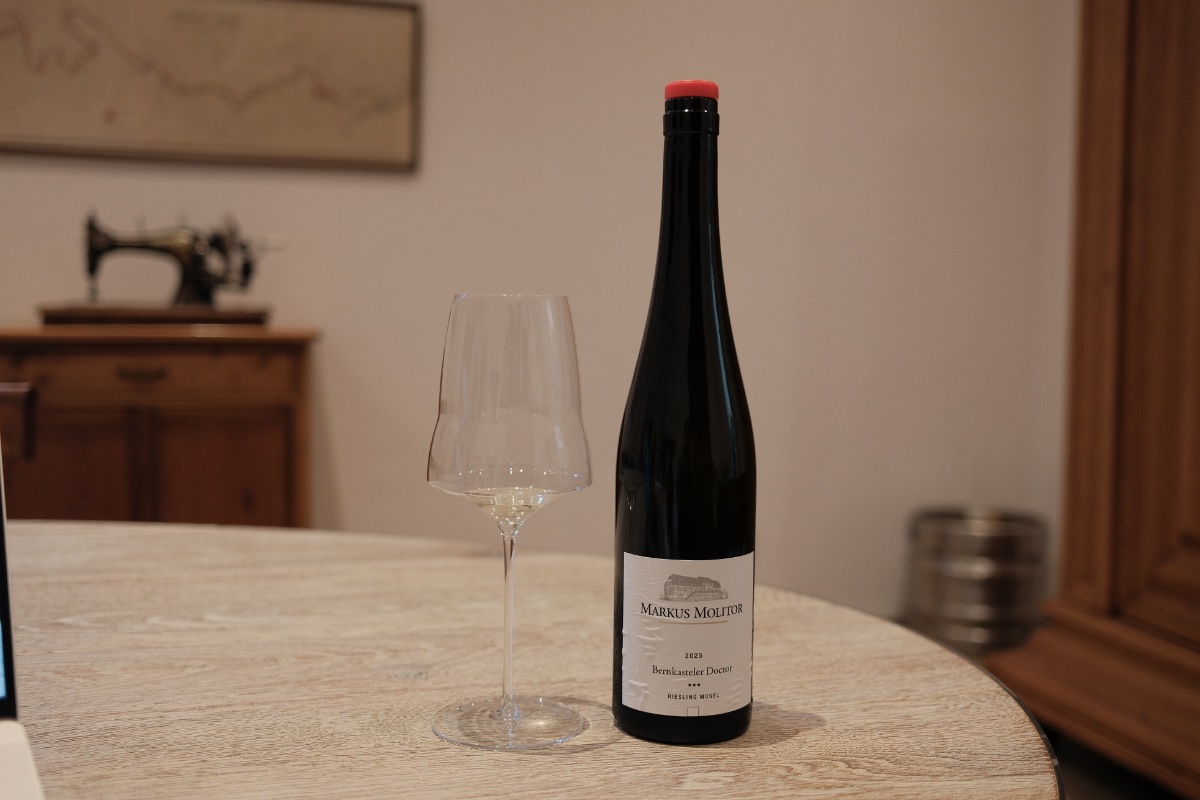
Pale lemon. Nose is floral smelling of ricotta lemon, kaffir leaf and Christmas pine tree. Palate leads with obvious depth and concentration but still opening up, with a layered tension of minerality and lemon drops. It is not rounded and not lean, leans somewhat in between. It’s both opulent and carries razor-like linear acidity, highly mesmerising.
I can see this going into high Gold category in the next few years. Highly promising.