Perspective
How AWR Scores Wines: Borrowed Structure, Asian Principles
AWR's Lead Founding Critic's note on the methodology that guides how AWR scores wines.
1 August 2026
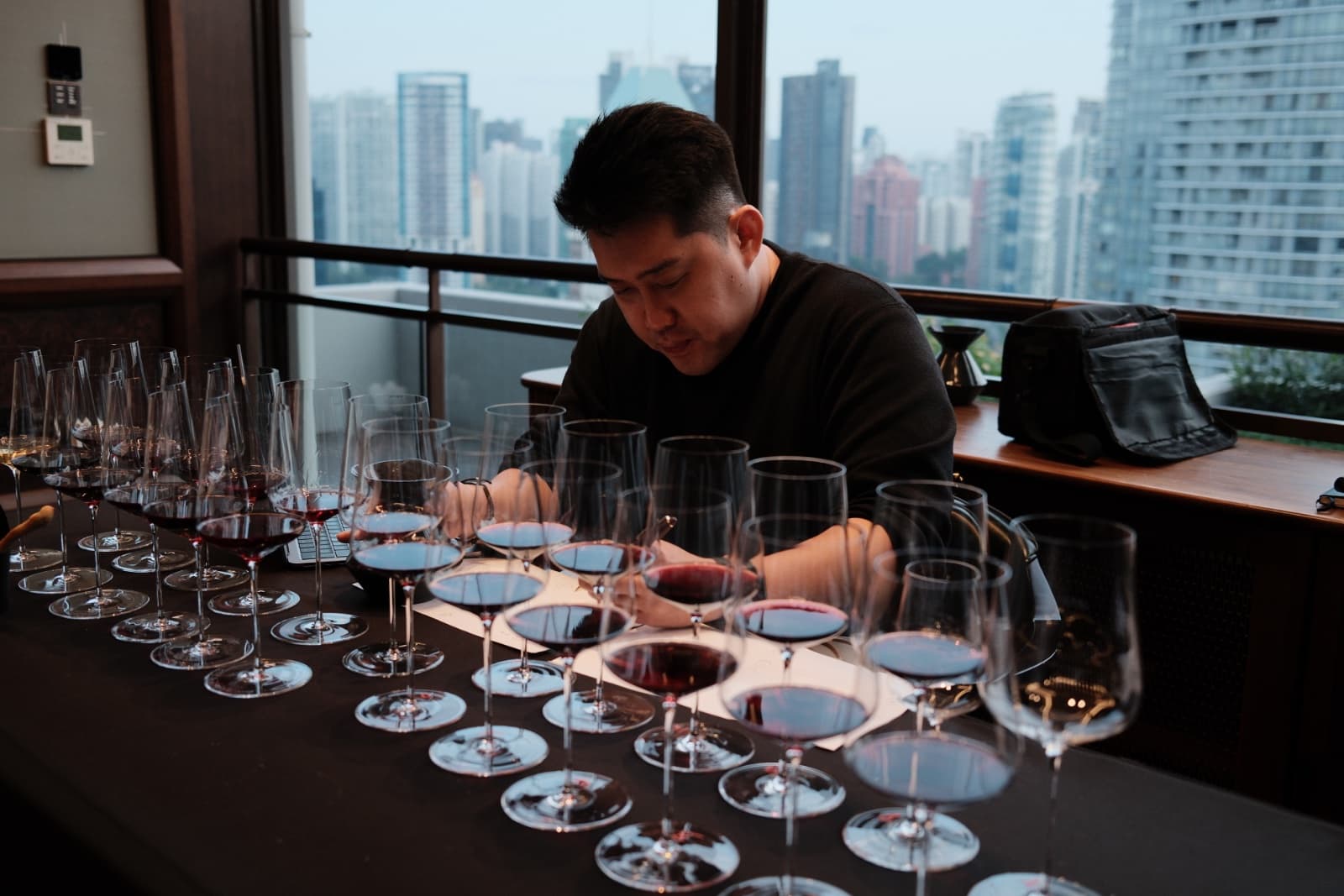
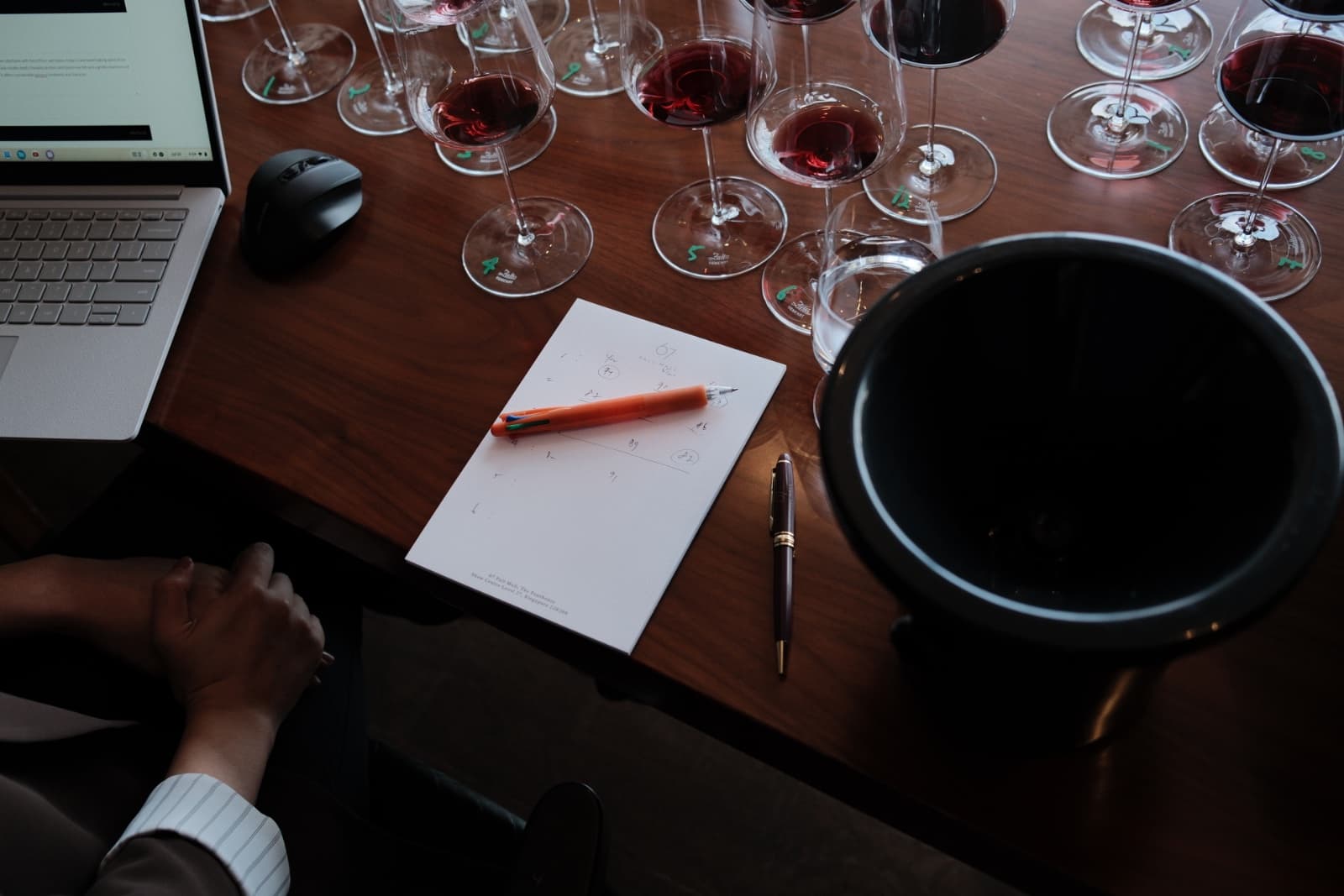
Gerald Lu, AWR's Lead Founding Critic, scoring wines during AWR's Inaugural Tasting on 20th July 2026.
Scoring is a practice that goes back thousands of years, the word itself rooted in the act of carving physical marks into walls, stones, and trees to count, tally, and track. As it evolved into the modern world, writers and scholars began compiling tabulations to create rankings and hierarchical lists. Schools moved away from verbal assessment towards numerical scores tied directly to ranking.
In the world of wine, the UC Davis 20-point system was developed as a teaching tool, built to standardise how students and researchers assessed wine quality. It broke evaluation into weighted components — Appearance, Aroma, Structural Components, Overall Quality and Impression. Later, the Parker 100-point system emerged for the consumer, linking wine assessment to a scoring language most people already understood from school. One system operates on clear criteria; the other carries a clear association with quality perception in the popular imagination.
The Asian Imprint
光明正大 (guāng míng zhèng dà), which literally translates to as open as the light of day and being completely upright, is the idiom surfaced early in Asia Wine Review's founding discussions mid last year. This shaped every decision that followed for AWR.
Adopting the criterion-based structure of the 20-point system mattered because it makes evaluation visible: a wine either has or does not have each quality we set out to assess. Clear, concise, undisputed.
But where was the soul? What about the impression, the voice of the wine, the expression of terroir?
以人为本 (yǐ rén wéi běn), which translates to putting the people first, is what AWR set out to do. So the question became whether we should adopt a system our readers would already understand and relate to instinctively: the 100-point scale most of Asia grew up with through school and, since, through wine media.