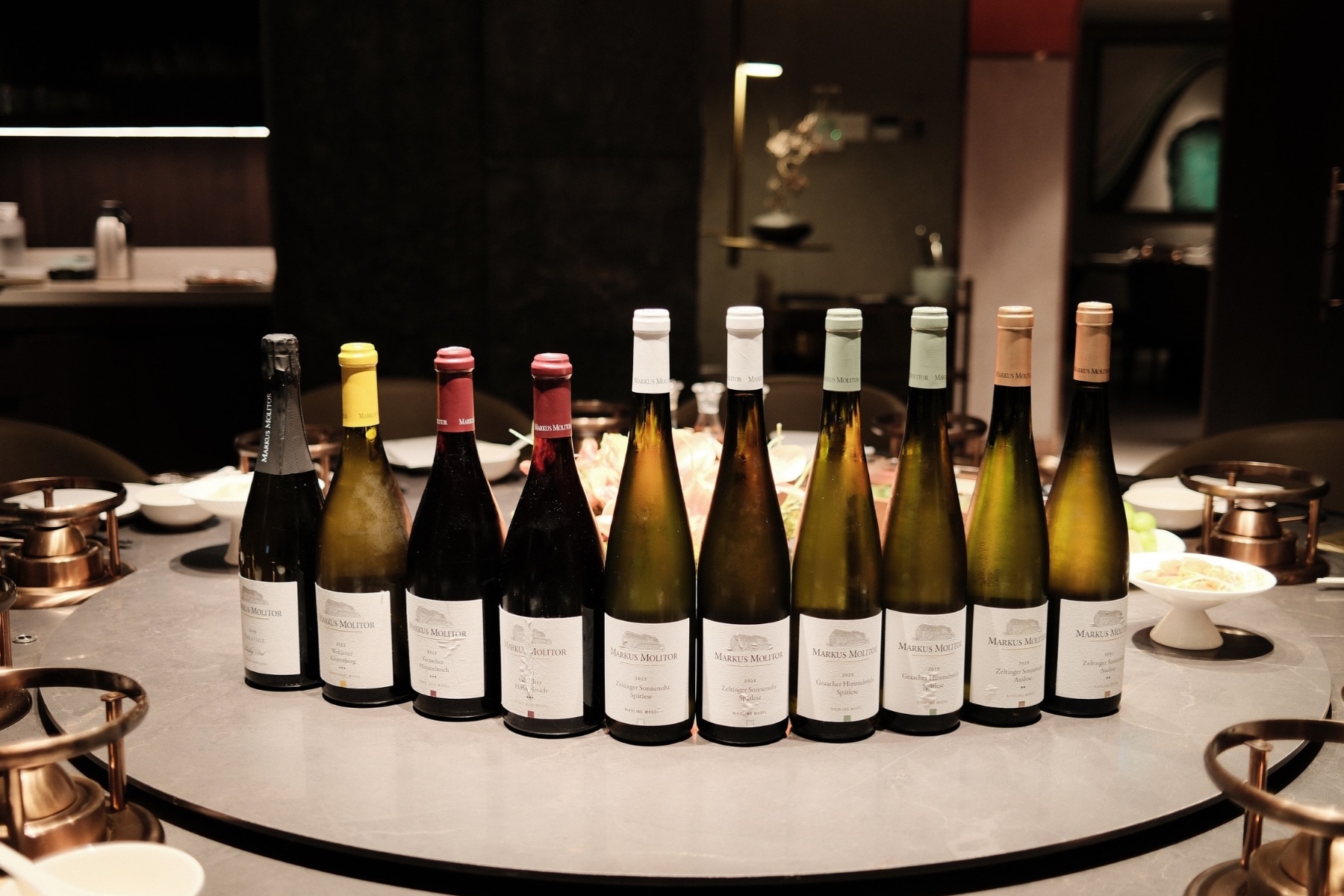
Back vintages, unreleased labels and special cuvees, unreleased to the Singapore market were poured. (Photo credit: Jaclene Liew)
It’s not every day you’re enjoying a hotpot meal in a private dining room in Orchard, with wines from one of Mosel’s most iconic wineries to pair. But there we were, on a Thursday evening with Jaclene Liew, the Founder and Editor-in-Chief of Asia Wine Review, where she poured ten different cuvées from Weingut Markus Molitor.
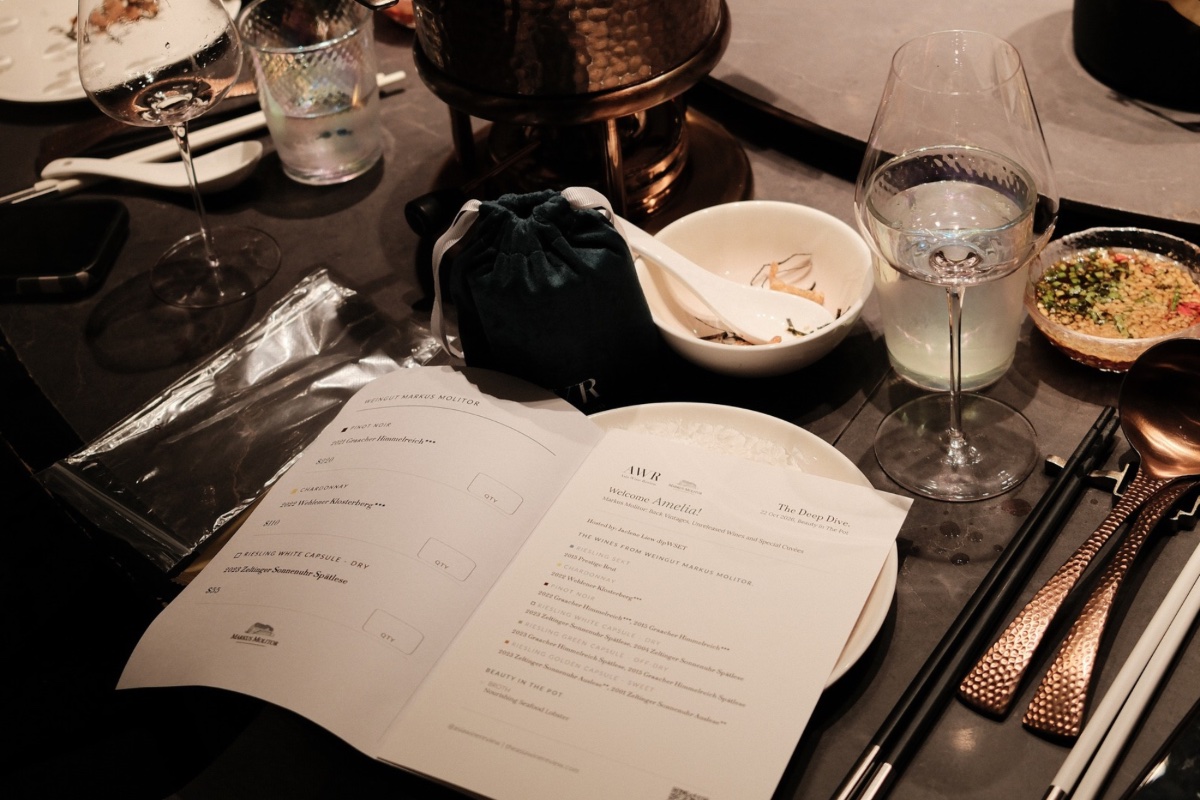
The focus of the event was on exploring both a horizontal tasting and a vertical tasting. The dinner started with a 2015 Prestige Riesling Sekt Brut which had been aged on its lees for a decade, and a 2022 Wehlener Klosterberg two-star Chardonnay. A pair of Pinot Noir almost a decade apart followed. Lastly, we would have been bereft if no Rieslings had been poured, and there were plenty.
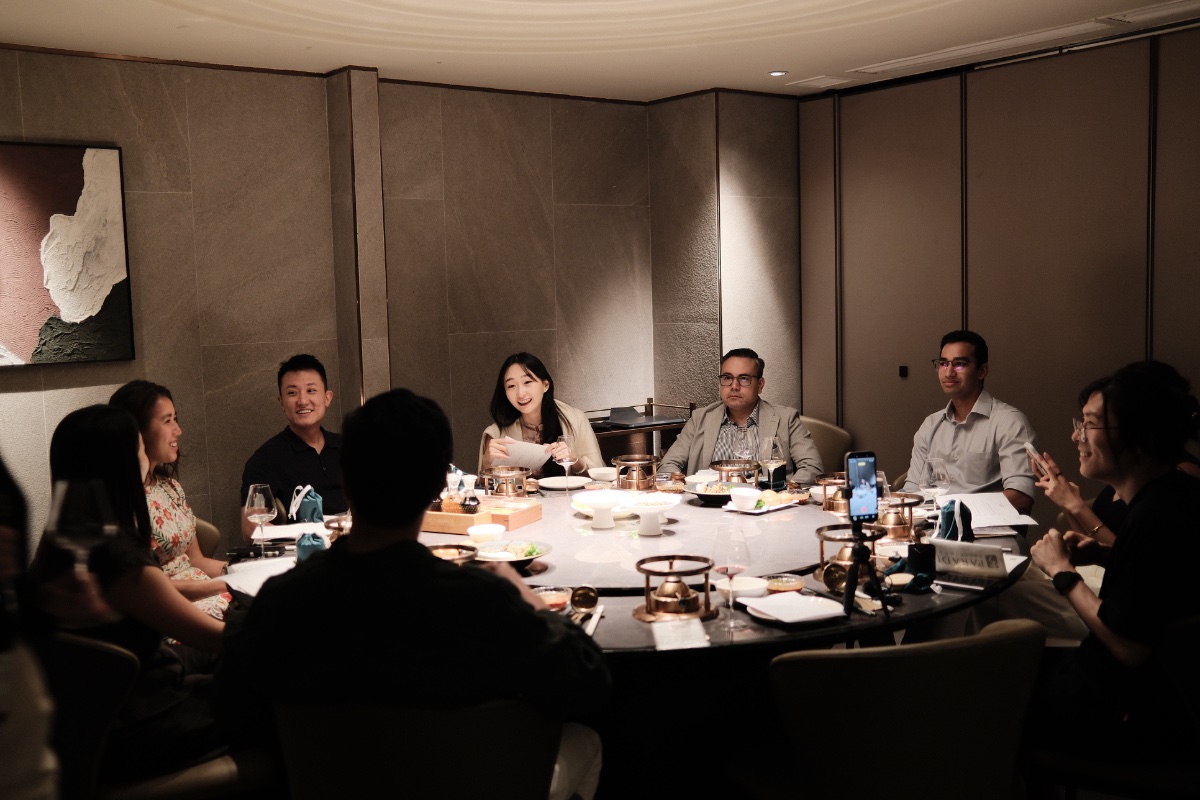
Jaclene hosted a table of 8 AWR members in a private dining room at Beauty In the Pot. (Photo Credit: Asia Wine Review)
Back vintages, unreleased labels and special cuvees were the name of the game. All of which were personally selected during Jaclene’s recent harvest trip with Markus Molitor, and specially flown in for this event. From the outset, it might seem a little odd to see German labels sitting next to Mandarin strokes on a menu. However, there is a quaint and unexpected harmony, especially when taste buds are involved, as our eight attendees soon discovered.
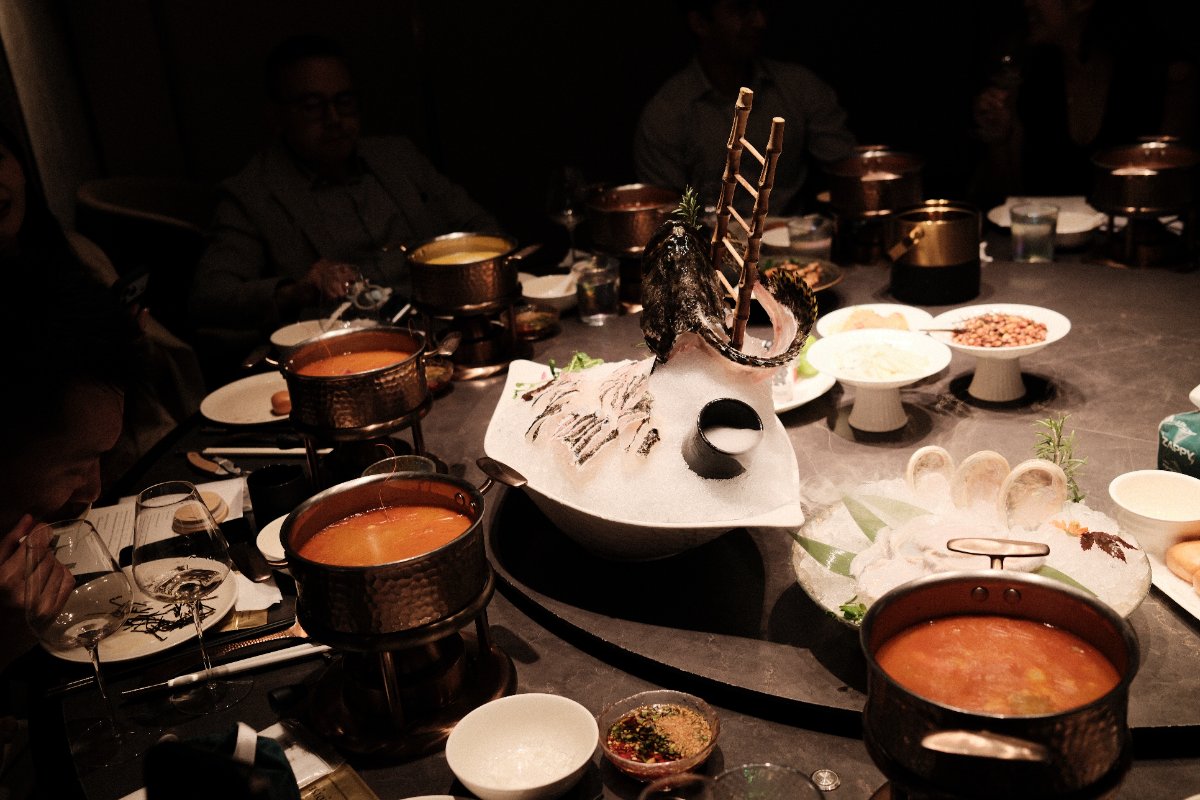
Guests could choose from a selection of four different broths: Beauty Collagen, Vitamin C Tomato Sweet Corn, Nourishing Seafood Lobster Broth and Fish Maw Chicken Vitality Broth; the latter two being exclusive only to the private dining room (no complaints from us there!). These were chosen specifically to work well across the range of wines that Jaclene had curated.
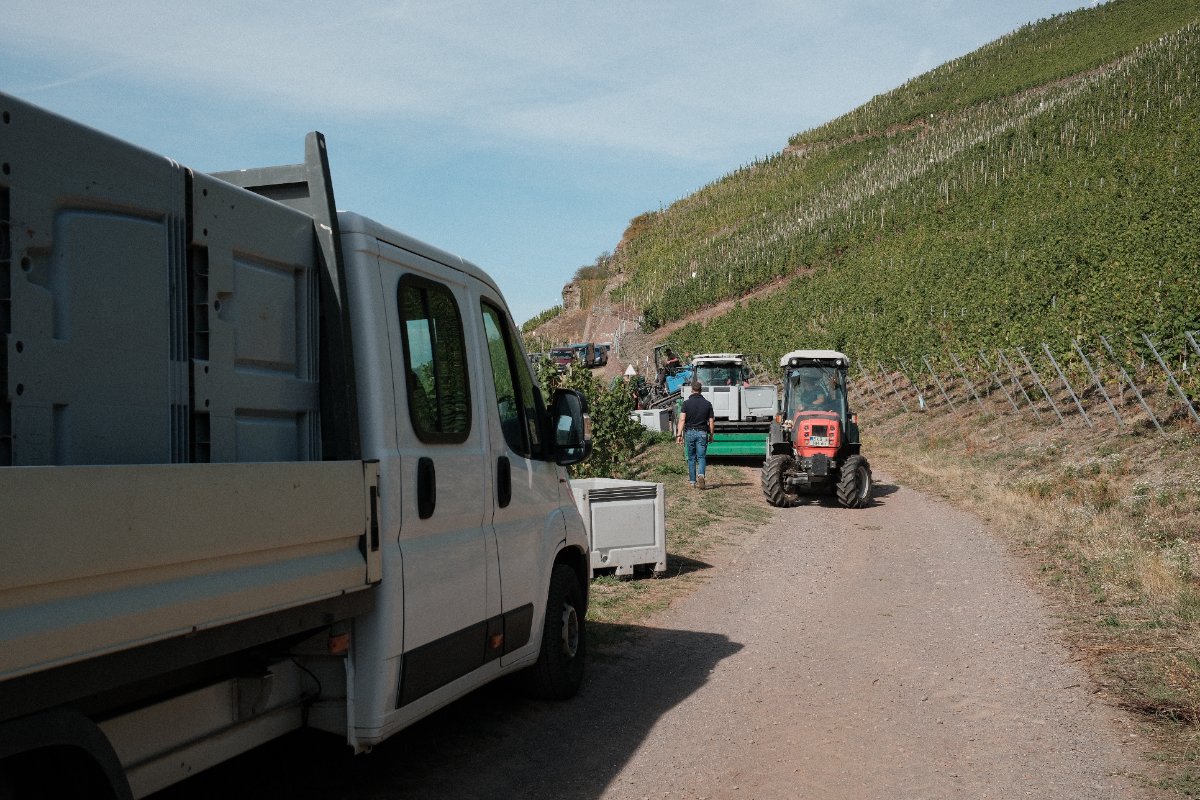
The event kicked off with a regaling of tales from Jaclene’s most recent trip to Germany, with stories about harvesting grapes on Mosel’s fabled steep slopes, helping out in the Vinothek (German for tasting room or wine shop), and a most charming canine companion very aptly named Riesling. The room fell into enchantment as if they had been whisked into a whole other dimension.
Jaclene shares her experience working the 2026 harvest with Markus Molitor (Photo credit: Jaclene Liew)
Between wisps of fog sublimating from the dry ice centrepiece of sliced Dragon Grouper, she introduced that evening’s bottles, which consisted of a side-by-side comparison of two vineyards: Graacher Himmelreich and Zeltinger Sonnenuhr. The former spans 57 hectares, faces southwest and is filled with rich slate soil with clay content. Wines from those vineyards boasted richness and body, whereas the latter consisted of weathered, deep slate soil interspersed with gravel.
Billowing dry ice vapour from the Dragron Grouper centerpiece sets a dramatic stage for arriving guests. (Photo credit: Asia Wine Review)
From the Graacher Himmelreich vineyard came two red-capped Pinot Noirs from 2022 and 2015, both three-star wines in the estate’s own classification. The other bracket also consisted of two green-capped (signifying an off-dry style) Spätlese Rieslings from 2023 and 2015 vintages.
And those from the Zeltinger Sonnenuhr vineyard consisted of white-capped (signifying dry styles) Spätlese Rieslings from 2023 and 2004 vintages and gold-capped (signifying sweet styles) Auslese Rieslings from 2023 and 2001 vintages that are two-star wines.
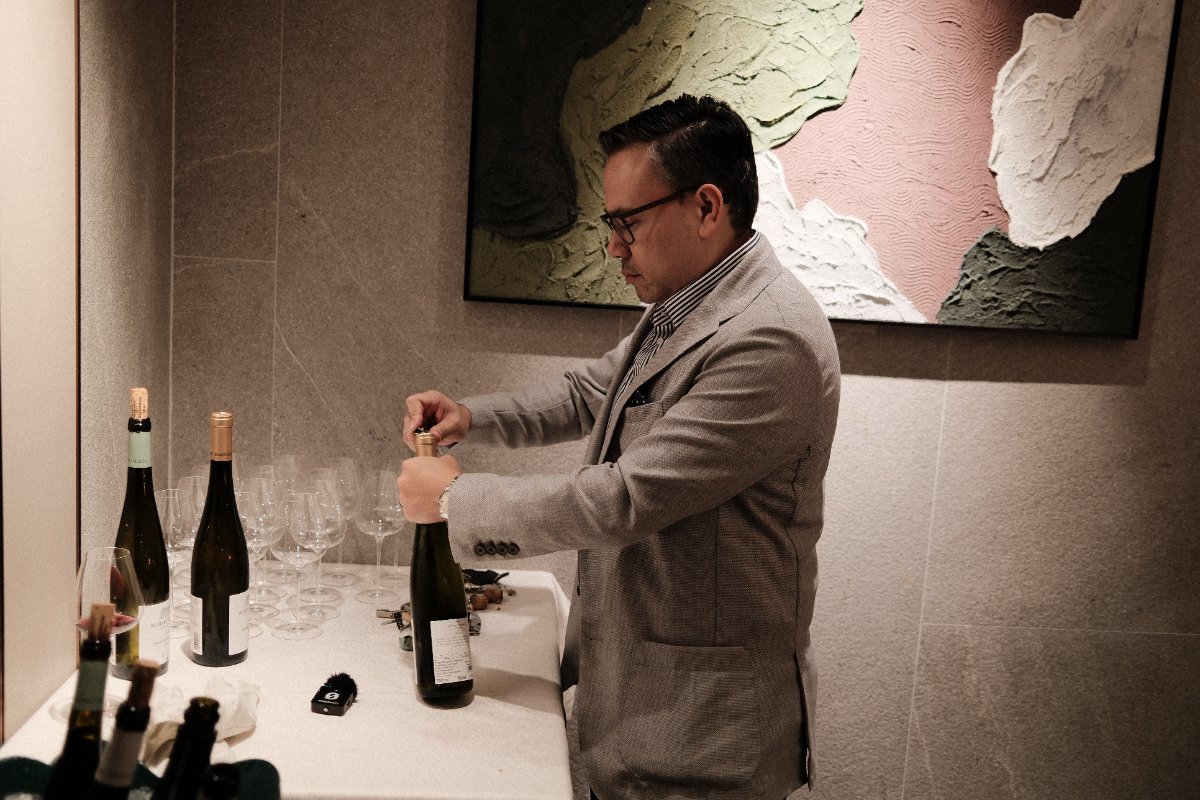
Opening the Zeltinger Sonnenuhr Auslese, with a vintage this old, it takes a steady hand to remove the cork without it crumbling. (Photo credit: Asia Wine Review)
What was easily the crowd favourite of that evening, however, was the gold-capped 2001 Zeltinger Sonnenuhr Auslese, a two-star wine. One of the event’s attendees, Jonic Zhu, notes that, in spite of its luscious sweetness, the 2001 Auslese retains a refreshing zippiness which contributes to its excellent structure. It was a textural delight that complemented the richness, creaminess and subtle sweetness of the broth. The twenty-five-year-old bottle also boasted white florals, a freshness and that quintessential petrol headiness many have come to expect from Rieslings of that calibre, demonstrating why it was hailed as that evening’s favourite.
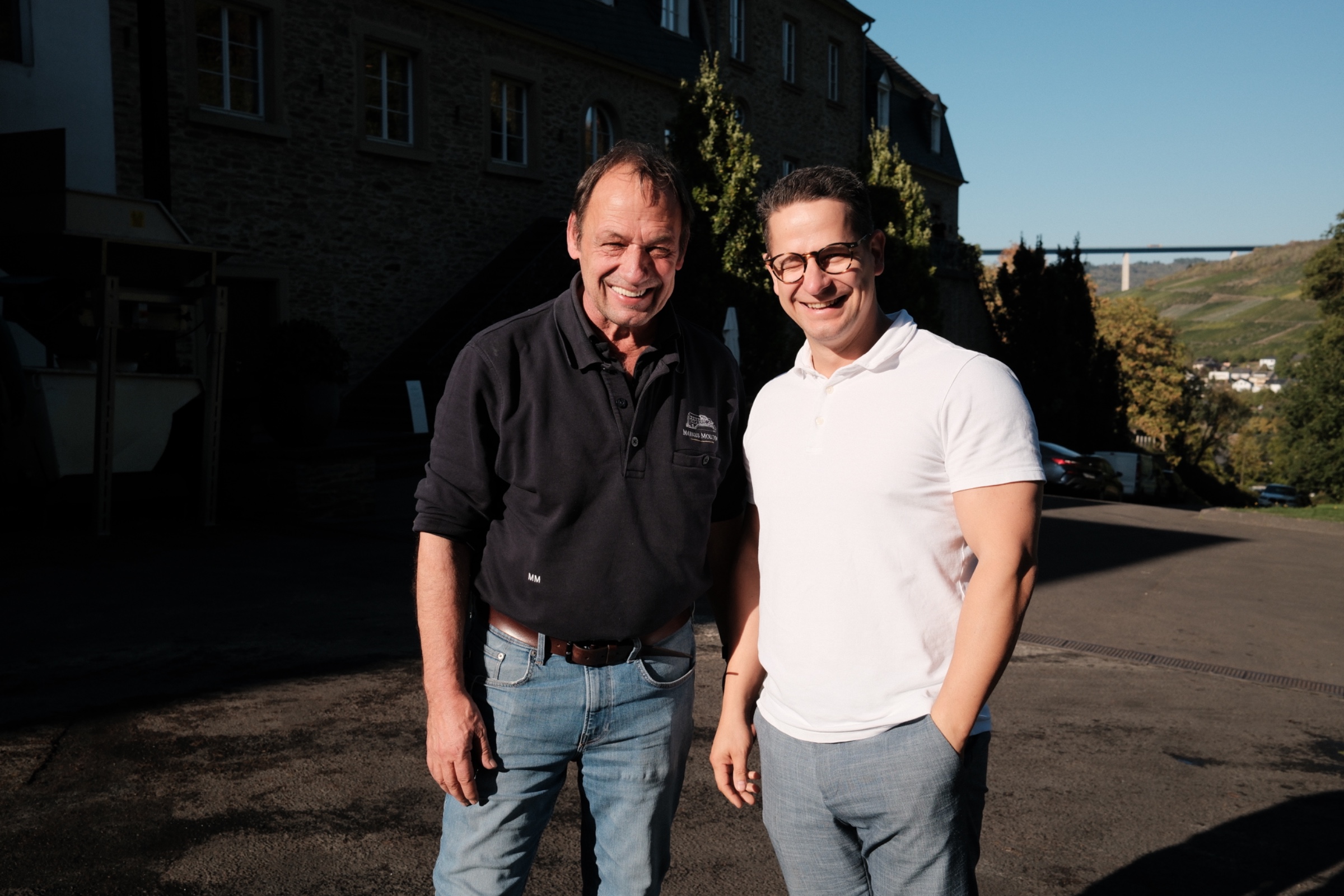
Markus has a singular focus: to bring the great potential of the Mosel back to life. On these vertiginous slopes and slate-laden soils, through meticulous, intense labour, hand selection and a keen reverence for fruit and place, Markus Molitor continues to impress — earning him critical acclaim and a cult-like following among collectors.
It is precisely the crystalline nature and purity of fruit in Markus Molitor’s wines that makes for such an ethereal pairing with traditional Chinese flavours. Amelia Lim, an attendee, says she loved being able to immerse herself in Markus Molitor’s storytelling alongside each bottle, and that every aspect of the event, from the food to the venue to the wines poured, was poignantly executed.
Each one of Molitor's wines authentically captures the true expression of its site and vintage. (Photo credit: Asia Wine Review)
Thank you to Weingut Markus Molitor for the current vintages wines and SKLO for the Linear N2 glasses.